
Moulded composites
Strong, lightweight moulded composite parts
Composites combine glass or carbon fibres with resin and can provide high strength at low weight. We develop and manufacture custom parts for wind, hydropower, construction and offshore applications, from prototype to series production.
What is a moulded composite?
A composite combines reinforcing fibres with a resin that binds them together. The fibres carry loads, while their type, direction and arrangement help determine strength and stiffness. Moulding makes it possible to build this structure into a shaped component rather than a constant-section profile.
Benefits for your product
Strength at low weight
Glass or carbon fibre reinforcement can provide the required strength without unnecessary component weight.
Design around the loads
The fibre layers and moulded shape can be developed together for the forces the component must withstand.
From shaped prototype to finished part
Patterns, moulds, machining, bonding and finishing can be planned as part of the same development and production project.
About composite
Composites
We develop and supply high-quality composite components for the wind and hydro energy industries on a global scale. Drawing on many years of experience, we offer efficient and reliable development as well as prototype production from our factories in Denmark. Composite components are one of our absolute core competencies, and we are proud of it.
Composite components are increasingly used across a variety of industrial applications, and there are many reasons for this. Composite materials are often lighter and stronger than traditional materials, and they can also be manufactured to precise specifications and requirements, which are critical in many industrial productions.
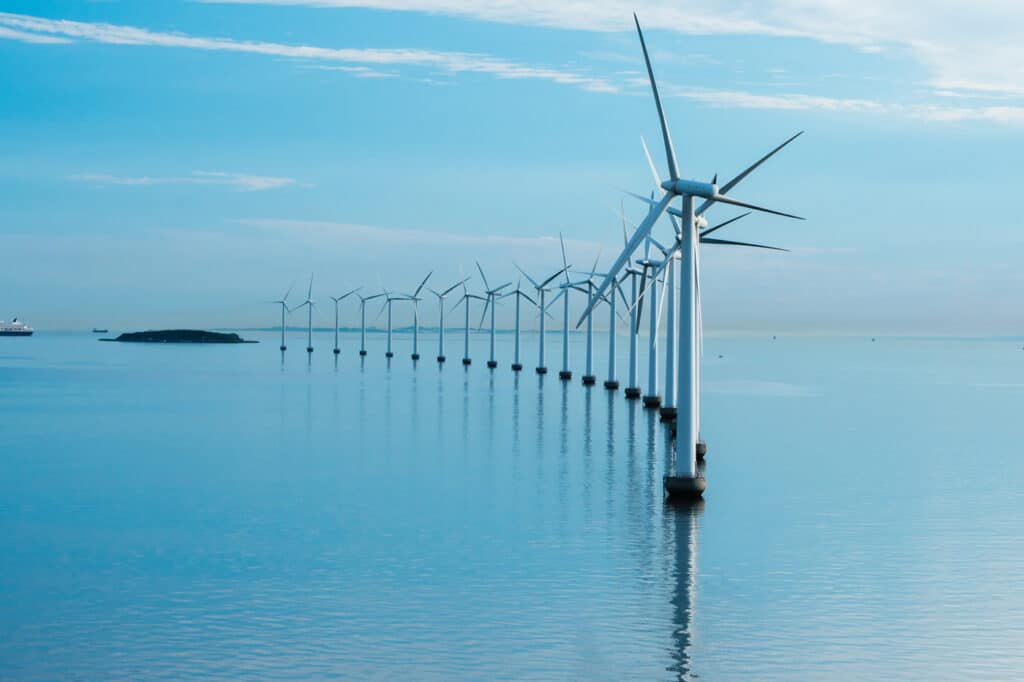
One of the key advantages of composite components is that they can be designed to withstand very high loads. This makes them ideal for use in the wind industry, where wind turbines are constantly subjected to environmental and climatic stresses. In fact, many of the world’s tallest wind turbines are made from composite materials. The same applies to the hydro energy industry, where dams and other structures must withstand the immense force of water.
Composite components are also highly resistant to corrosion, which is another important factor in many industrial contexts. This means they have a much longer lifespan than traditional materials, potentially saving companies a significant amount of money over time. Furthermore, composite components can often be recycled or repurposed, further reducing their environmental impact.
The material has countless applications!
Our team possesses extensive experience and expertise in composite components, and we are ready to assist you with your specific requirements and needs.
Products
We offer:
- Production in all types of resin, including epoxy, polyester, vinyl ester, phenolic, and more
- Glass and carbon fibre
- Plug and mould production
- Injection, hand lay-up, RTM, and vacuum processes
- Prototype and mass production
- Surface treatment
- Special projects and development
We use a wide range of materials, including glass fibre, carbon fibre, epoxy, polyester, and more. Our primary focus is on glass fibre and epoxy, as we believe that the combination of these two materials’ properties provides the best solution for manufacturing high-quality composite components. The choice of materials ultimately depends on the customer’s requirements and the intended use of the final product. In addition, we use these materials in complex processes such as hand lay-up, vacuum processes, injection, RTM, and mould injection.
About our composite expertise
We develop and supply composite components primarily for the wind industry, but also for sectors such as hydro energy, construction, and offshore. Drawing on many years of experience, we offer fast and reliable development as well as prototype production from our factories in Denmark.
Our composite expertise originates from MM Composite, which was established in 2011, but we have a long history. Our roots go back to 1979, notably to Marxen A/S. This means we can draw on extensive experience in the development and production of composite components.
Materials
Glass fibre
Glass fibre is one of our preferred materials due to its many qualities and applications. There are numerous reasons for its great potential in the wind and hydro energy industries. Glass fibre is very lightweight, yet extremely strong and durable, which is why it is widely used across many manufacturing sectors. In addition, it is easy to work with, fire-resistant, and weatherproof, making it a frequent choice in our industry as well.
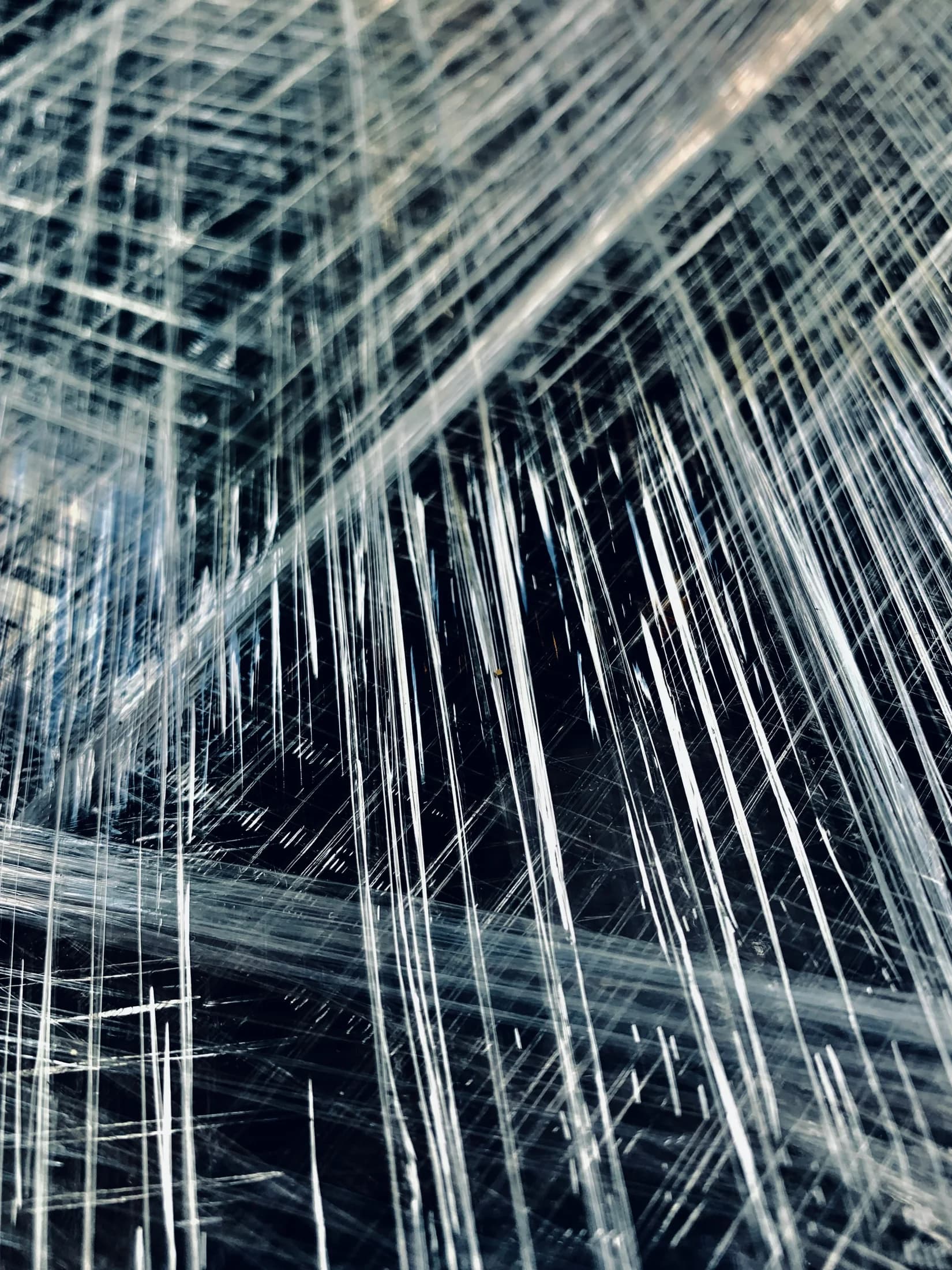
Glass fibre is a composite material made up of glass fibres and a thermosetting resin. A single structural glass fibre is stiff and strong in tension and compression, yet weak in shear. This means, for example, that if a bundle of fibres is aligned in a preferred direction within a material, the material will be predominantly strong in that direction—provided the fibres do not buckle under compression. Furthermore, stiffness and strength can be effectively enhanced by layering multiple sheets of fibres on top of each other, with each layer oriented in different directions. This can make the material even stronger. We use a variety of glass fibre fabrics, including unidirectional, biaxial, triaxial, and chopped mats.
We have extensive understanding of and experience with the properties and processing of glass fibres, as well as their production. This makes us the ideal partner for you. We use our extensive knowledge and expertise to develop the best and most innovative solutions that meet our customers’ wishes, needs, and requirements. Our team and experts are always ready to work collaboratively to find the optimal solution for your project. The potential applications depend on the specifications required for the final product.
Fibreglass
We work with a wide range of materials, all of which share the quality of being top-tier products with numerous excellent and strong properties. One of these materials is fibreglass, which we use in several different production processes. We employ fibreglass to manufacture composite components for the hydro energy and wind industries, as well as for other industrial or custom-designed applications. Our employees have extensive experience with the material, and we handle the fibreglass production in-house.
Fibreglass consists of fibrous minerals made up of extremely thin and long glass fibres. It is an ideal material for many manufacturing applications due to its high strength-to-weight ratio and durability. It is also relatively easy to work with, which helps to keep our production costs down. Furthermore, we are able to tailor the properties of fibreglass composites to meet our customers’ specific requirements. It is central to us that we accommodate our customers’ needs: we deliver high-quality products that meet both your and our exacting standards.
We are constantly exploring new ways to utilise this versatile material to best meet our customers’ needs. We continually push the boundaries of what is possible within the material’s capabilities. If you are looking for a collaborative partner, have any questions, or would like to learn more about the material’s many possibilities, please get in touch. Our experience and expertise are first-rate, ensuring that every project is carried out efficiently and to the highest standards.
Epoxy
If you are looking for the highest-quality epoxy, you have found the right partner. We manufacture composite components for the wind and hydro energy industries on a global scale, and epoxy is one of our specialties. We often use a combination of epoxy and glass fibre, as we believe that this pairing provides the optimal solution and the best final product. Epoxy production is therefore one of our key areas of expertise. In addition, we use these materials in complex processes such as hand lay-up, vacuum processes, RTM, and injection moulding.
Epoxy is a versatile and reliable composite material, ideal for a wide range of applications within the wind and hydro energy industries. We are proud to offer epoxy products tailored to your specific requirements. Whether you need our products for hand lay-up, vacuum processes, injection, RTM, or similar methods, we have the perfect solution for you.
The low viscosity of the epoxy material ensures rapid and complete impregnation of reinforced glass fibre and enables the production of laminates through contact pressure, filament winding, and vacuum-assisted resin injection. Furthermore, it is a thermosetting polymer, meaning it is formed through the reaction of epoxy resin and a polyamine hardener.
The many advantages of this material also make it our preferred choice when manufacturing wind turbine blades and where adhesive material is required. This is because it allows the production of composite components with high shear and compressive strength, and epoxy also possesses excellent mechanical and electrical properties. Finally, the material is significantly lighter per unit volume than, for example, polyester-based composites, which is why we favour using it for a large part of our daily work.
Carbon fibre
We work with a wide range of materials, as we aim to meet our customers’ needs as fully as possible, so that together we can find the best solution using the most suitable material.
Carbon fibre, also known as graphite fibre, is one of our preferred materials. It is made from extremely fine carbon fibres. It is strong and stiff, yet lightweight and heat-resistant. These properties make it ideal for use in many industrial and technological applications, such as in the wind energy industry.
The production of carbon fibre involves several stages. First, the raw material (usually PAN or pitch) is heated to a high temperature to form a pure carbon crystal. This crystal is then spun into long fibres, which are subsequently bundled together to create the desired product. Carbon fibre can be used to reinforce other materials or to manufacture standalone products, such as composite panels or tubes. In the wind energy industry, carbon fibre is often used to produce turbine blades. Its high strength-to-weight ratio makes it an ideal material for wind turbine blades, which must withstand enormous forces and environmental stresses while remaining light enough to rotate efficiently.
Similarly, carbon fibre is often used in the hydro energy industry for the construction of dams and other water-related infrastructure. The production of carbon fibre requires high temperatures and careful control of the manufacturing process. For this reason, it is typically produced in large industrial facilities like ours.
The use of carbon fibre can help reduce the weight of products while enhancing their strength.
The material’s resistance to both corrosion and fatigue makes it an ideal choice in many applications.
Glass fibre-reinforced plastic
We specialise in glass fibre-reinforced plastic (GFRP), which is used in many industries, including the wind energy and hydro energy sectors. In this application, glass fibre is used to reinforce the plastic, making it stronger and more durable. Glass fibre is an excellent material with numerous applications due to its high strength-to-weight ratio and low thermal expansion.
Furthermore, GFRP is often used for composite components because it can be shaped into complex and advanced forms while maintaining its strong structural integrity. We deliver glass fibre products tailored to specific requirements and needs, providing the highest quality to our customers.
There are several different processing methods for GFRP, the most common being hand lay-up and spray-up. Hand lay-up is the simplest processing method. A mould, for example made of wood, polyester, or concrete, is lined with glass fibre mats, which are then manually coated with polyester or epoxy mixed with a hardener. This process is repeated until the desired material thickness is achieved. In spray-up, a similar mould is used as in hand lay-up. Using a spray gun, the plastic material mixed with short glass fibres is applied directly into the mould.
Glass fibre can also be used to reinforce thermoplastics such as polyethylene, polypropylene, and polyamides.
One of the areas where GFRP is most widely used is the wind energy industry, where glass fibre is employed to reinforce blades and towers. The material is also frequently used in the hydro energy industry, where it is used to strengthen turbines and other underwater components.
Our company has extensive experience and expertise in GFRP and the composite components made from it. We have a team of experts familiar with the material’s many properties and its production, enabling us to create the best products for you.
Furthermore, we have the production facilities, equipment, and latest technology necessary to meet our customers’ needs and deliver top-tier manufacturing. This enables us to achieve the highest standards in both glass fibre and glass fibre-reinforced plastic.
Process
One of our greatest strengths is our expertise in developing processes for customer-specific products. This means that, in close collaboration with the customer, we can, for example, develop a composite component entirely from scratch. In other words, we help the customer move from concept to finished product.
It is very important to us that the customer feels secure and well-supported throughout the entire process. We achieve this, among other things, by maintaining close contact with the customer throughout the project. This ensures that the product we deliver meets the customer’s requirements and expectations.
Customer consultation
The initial phase of a new collaboration is very important to us, as it is here that we aim to get to the heart of the customer’s wishes and needs. Our strength lies in our flexibility and readiness to collaborate when it comes to developing new products. Therefore, this initial phase is where we create a sense of security for the customer.
Specifically, we always work based on both long-term and short-term planning. Long-term planning ensures that decisions are made using the latest knowledge of demand and are carried out in collaboration between our Sales Director and Production Manager. Short-term planning is carried out by the individual department heads based on the actual orders in the order overview.
Development phase
During the development phase, our employees work on creating the desired product. One of our strengths is having a dedicated and thorough team. In addition, we maintain very close collaboration among colleagues, which ultimately contributes to a safe and high-quality result. We constantly have a development team in operation, allowing us to stay ahead of market requirements for composite components.
Finished product
When a project is completed, we place great emphasis on ensuring that the product meets all standards. With our very strict quality control policy, which guarantees that every item is 100% compliant, we can also provide documented proof to the customer that all specified requirements have been met.

Resin Transfer Moulding (RTM)
We have specialised in RTM, which refers to a manufacturing technology called Resin Transfer Moulding.
RTM is a manufacturing process that involves injecting resin into a specific mould. The mould is then closed, and the resin is allowed to cure, forming the desired shape. This manufacturing technology is often used for complex or intricate shapes that would be difficult to produce using other methods. The technique can also be used to create parts with multiple cavities, which would otherwise be a challenging and technically demanding task, such as electrical enclosures or engine blocks.
One of the advantages of RTM is that it provides superior dimensional accuracy due to its mechanical properties, making it an ideal choice for high-precision applications. It is a relatively fast process, which makes it a cost-effective option for large-scale production.
This technology and manufacturing method also provide a smooth and attractive surface finish.
Tell us about your idea or component
Tell us what the part needs to do, how many you need and when. We can start with a sketch or drawing, or help clarify the next step if you do not have one yet.